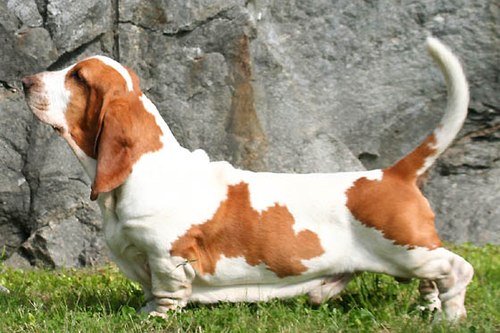
Hound group
Beagle
Also called English Beagle
The Beagle is a compact, merry scent hound that weighs up to about 30 lb (14 kg). Friendly with children and other dogs, it is easy to groom but hard to train off-leash, because a Beagle's nose and voice often rule its behavior.

- Height
- 13–15 in (33–38 cm)
- Weight
- 20–30 lb (9–14 kg)
- Life span
- 10–15 years
- Size
- Small
- Origin
- England
- Coat
- Short, dense, weather-resistant double coat
Colors: Tricolor, Lemon, Red and white, Tan and white, Blue tick, Black, tan and white
Great for
- Families with children
- Active walkers who enjoy sniffing adventures
- Homes with another dog
- Owners with a securely fenced yard
Think twice if
- People who want off-leash reliability
- Noise-sensitive neighbors
- Households that leave dogs alone all day
- Owners who can't resist begging eyes
Traits at a glance
1–5 scale. For grooming, shedding, drooling and barking, 5 means more. For the “living with” rows, 5 means copes well.
Living with
- Apartment living
- Good for first-time owners
- Tolerates being alone
- Handles cold
- Handles heat
Personality
- Affection with family
- Good with kids
- Good with other dogs
- Friendly to strangers
- Playfulness
- Watchdog instinct
Care
- Grooming needs
- Shedding
- Drooling
- Barking
- General health
Energy & training
- Energy level
- Exercise needs
- Trainability
- Prey drive
Personality
Beagles are cheerful, curious, sociable dogs. Bred to hunt in packs, they like company, and most get along with children, visitors and other dogs. Few breeds are as quick to wag and as slow to be suspicious of strangers, which makes them friendly but unreliable watchdogs.
The nose runs the show. A Beagle on a scent trail may become deaf to your commands, and a food scent on the counter is a challenge it takes seriously. This single-mindedness is often mistaken for stubbornness.
Beagles are also vocal, producing howls, bays and barks. Left alone for long hours, they can become bored and noisy, dig, or escape from yards. They are playful well into adulthood, and many keep a puppy-like silliness for years. Best suited to homes with company, they appreciate a pack, which can be human, canine or both. Expect a sweet, sturdy companion with a mind of its own.
History
Beagle was used from the Middle Ages as a generic name for smaller hounds, though those dogs differed considerably from the modern breed. By the 1700s two types, the Southern Hound and the North Country Beagle, had been developed in England to hunt hare and rabbit. Hunters valued their stamina, scenting ability and voice.
The modern Beagle grew out of English packs in the 1800s, and by the late 1800s breeders and clubs were working to standardize the type. The Beagle came to the United States, where the American Kennel Club recognized it in 1885 and the National Beagle Club of America formed in 1888. Beagles have always been more popular as purebreds in North America than in England.
Beagles are now far better known as companions than as hunters, though some work as scent detection dogs, including the Beagle Brigade of the United States Department of Agriculture, which finds prohibited food items in luggage entering the country. They are also one of the dog breeds most often used in animal research, which has led to ongoing public debate. The breed remains among the most popular in the United States.
Appearance, coat & colors
The Beagle is a sturdy, compact hound with a square muzzle, long soft ears and large, expressive brown or hazel eyes. The AKC recognizes two varieties: dogs under 13 in (33 cm) and weighing under 20 lb, and dogs 13–15 in (33–38 cm) weighing 20–30 lb (9–14 kg).
The coat is short, hard and dense, a weatherproof double layer that sheds moderately. The classic pattern is a tricolor of black saddle, tan head and legs, and white chest, legs and tail tip. Other recognized colors include lemon, red and white, tan and white, and blue tick patterns.
The tail is carried high, with a white tip that makes the dog easy to spot in tall grass, a feature that helped hunters. Pocket Beagles, often advertised as smaller than the standard, are not a recognized variety, and tiny dogs sold under that name may have health problems.
Training
Beagles are smart but independent. They are driven by food and scent, so training works best when you use both. Use small, smelly treats, keep sessions short, and end on a positive note. They are not eager to please in the way a retriever is, so patience and repetition matter more than force.
House training can take time, and a crate helps; read our crate training guide. Teach leash manners early, since a Beagle that catches a scent can pull hard. A harness is gentler on the neck than a collar.
Recall is the biggest challenge. Even well-trained Beagles are often unsafe off leash in unfenced areas because the scent drive can override training. Practice with a long line and make coming back worthwhile. Many Beagles enjoy nose work and tracking, which channel their instincts. Teach a "quiet" cue early if barking becomes an issue. Socialization with people and other dogs is usually easy.
Exercise
Beagles are energetic and need daily exercise that lets them explore and stay active. Walks should include time to sniff, which is mentally satisfying for a scent hound. Our guide to how much exercise a dog needs can help you plan.
Games of fetch, hide-and-seek with treats, scent trails and nose work classes are all good ideas. Keep your dog on a leash or inside a secure fence when outdoors. Beagles can follow a scent for miles, and they are skilled at digging under or squeezing through fences.
A tired Beagle is a calmer one. Without enough activity, many become destructive, howl, try to escape or gain weight quickly. Puppies shouldn't be pushed into long runs while their joints are developing. In hot weather, exercise early or late in the day. Because of their short legs and low body, Beagles are good walking companions but not ideal for extended jogging in warm temperatures.
Grooming
Beagles are among the easiest breeds to groom. A weekly brush with a rubber curry or hound glove removes loose hair, and a quick wipe-down keeps the coat shiny. They shed moderately year-round, so brushing a few times a week helps when the fur is flying.
Bathe only when needed, as they can pick up a lingering doggy smell, especially if they roll in something. The floppy ears trap moisture and debris, so check and clean them weekly to prevent infections. Trim nails regularly and brush teeth several times a week; see our guide to brushing teeth.
Watch the eyes for redness or discharge, because cherry eye and other issues occur in the breed. If your dog scoots or licks the rear, ask your vet about anal glands. A Beagle's grooming needs are modest enough that regular handling can double as a quick health check.
Feeding
Beagles are famously food-motivated and prone to obesity. Many will eat until sick and are experts at raiding trash cans, countertops and pantries. Store food securely, measure meals and resist the begging.
Feed a complete and balanced diet suited to your dog's age and activity, usually split into two or three meals. Our dog food calculator offers a starting estimate; adjust it to keep your dog lean. A slow-feeder bowl helps with fast eaters.
Treats should stay under about 10 percent of daily calories, and training treats can be tiny. Use fresh vegetables such as green beans or carrots if your vet says they suit your dog. Check your dog's condition using our guide on telling if your dog is overweight: you should be able to feel the ribs and see a waist from above. Extra weight puts strain on the back and joints and worsens spinal and joint problems.
Health
Beagles are generally hardy, but they have several breed-linked conditions. Epilepsy is more common than in many breeds. Hypothyroidism, cherry eye, cataracts, ear infections, allergies and intervertebral disc disease also occur, and obesity is the most common preventable issue.
Musladin-Lueke syndrome (MLS) is an inherited condition specific to the breed that causes stiff skin and tight, contracted joints, and a DNA test is available. Hip dysplasia and patellar luxation can occur too.
Watch for seizures, sudden back pain, repeated ear scratching, swollen red eyes or changes in thirst and weight. Call your vet promptly if you notice these. Keep your dog lean, trim nails and clean ears regularly. Reputable breeders test for known inherited conditions and share the results. Pet insurance purchased early can help with costs for eye and spinal conditions.
Health conditions to know about
- Obesity — A powerful appetite makes weight gain easy and increases joint and spinal risk.
- Epilepsy — Seizure disorders occur more often in Beagles than in many breeds.
- Intervertebral disc disease — Disc problems can cause back pain and weakness, especially in overweight dogs.
- Eye conditions — Cherry eye and cataracts are seen in the breed.
- Musladin-Lueke syndrome (MLS) — An inherited condition causing stiff skin and contracted joints; DNA testing is available.
Health tests to ask a breeder about
- Hip evaluation
- Cardiac exam
- Eye exam by a veterinary ophthalmologist
- Thyroid evaluation
- MLS DNA test
Read more: diabetes, ear infections, hypothyroidism, intervertebral disc disease (ivdd), obesity.
Written from veterinary sources by the Pawsplained editorial team. Not yet reviewed by a veterinarian; this is general information, not a diagnosis or treatment plan. Updated Oct 25, 2026. Editorial policy
Living with a Beagle
Beagles adapt to houses and apartments, but their howling can annoy neighbors, so training and enough exercise are important. A secure, high fence is critical for a yard, as Beagles are escape artists and will follow a scent beyond your property. Check the fence for gaps and dig-under spots.
They are pack animals that dislike solitude. If you are out all day, consider a second dog, a dog walker or daycare. A crate can help prevent trouble, but shouldn't replace companionship.
The short coat is weather-resistant but offers limited protection in extreme cold, so give a coat when it's freezing. Beagles are excellent with children and are tolerant of rough-and-tumble play, though supervision is wise. They usually get along with other dogs and cats, but small pets such as rabbits may trigger their hunting instincts. Keep garbage cans and food securely out of reach.
Puppies, breeders & rescue
Beagle puppy prices vary widely by region and breeder. Because the breed is popular and relatively easy to produce, puppies are often sold by people who do little health testing.
A responsible breeder will test breeding dogs for MLS and should be able to show hip, heart, eye and thyroid evaluations, which are the tests the national breed club recommends. They will let you meet the mother, discuss temperament and voice, and offer a written contract. Avoid sellers advertising "pocket" Beagles or other novelty sizes, which are not recognized and may involve unhealthy breeding.
Beagles are common in shelters and breed rescue groups, and adults often come with known temperaments. Whichever route you choose, plan for a 10- to 15-year commitment. Our breed selector and puppy weight calculator can help you plan.
Beagle FAQ
How big do Beagles get?
The AKC recognizes dogs under 13 in (33 cm), weighing under 20 lb, and dogs 13 to 15 in (33 to 38 cm), weighing 20 to 30 lb (9 to 14 kg).
Do Beagles bark and howl a lot?
Yes. They were bred to give voice on the trail, and many bark, bay or howl when bored, excited or alone. Exercise and training reduce the noise.
Can Beagles be left alone?
Not for long. They are pack-oriented and can become destructive or noisy when isolated. A companion dog, a walker or daycare can help.
Are Beagles easy to train?
They are smart but scent-driven and independent. Training works with patience and food rewards, but off-leash reliability is difficult.
Why does my Beagle eat everything?
Beagles are strongly food-motivated scent hounds. Secure food, measure meals and use puzzle feeders to satisfy that drive.